Zimbabwe
- World of Food

- Apr 28, 2021
- 8 min read
Welcome to stop #7, Zimbabwe!

We have a very exciting menu this week including dovi, muboora and chickenduza!

A bit about Zimbabwe

Zimbabwe is a landlocked country in Southern Africa. It is located between the Zambezi and Limpopo rivers and shares borders with South Africa, Botswana, Zambia and Mozambique. The capital city is Harare. Zimbabwe has a population of approximately 14 million people. Bantu speaking ethnic groups make up 98% of the population. There are 16 official languages including English, Shona, Ndebele, Venda, Tsonga, Shangaan, Kalanga, Sotho, Ndau, and Nambya.

Humans first settled this area 100 000 years ago and the earliest inhabitants were the San people. Bantu speaking farmers arrived 2000 years ago. The first Europeans to make contact with the area were the Portuguese who sought to monopolize their influence over the area in the 17th century, thus starting a series of wars. As a direct response to the increased European presence the new Shona state known as the Row Empire emerged and used military force to expel the Portuguese from the Zimbabwean Plateau. In 1821 the Zulu general Mxilikazi rebelled and established his own clan known as the Ndebele and by 1838 the Ndebele had conquered the Row Empire. The tribe then permanently settled the south-western area of present day Zimbabwe.
In the 1880s European colonists, in the form of Cecil Rhode’s British South African Company, arrived and eventually obtained mining rights. In 1895 the BSAC adopted the name Southern Rhodesia for the territory. Eventually the Ndebele people rebelled against white rule under their leader Mlimo, this was known as the Second Matabele War. In 1896 Mlimo was assassinated which put an end to the war. The UK annexed Southern Rhodesia on Sept 12, 1923 and shortly after the first constitution for the new Colony of Southern Rhodesia came into effect and Southern Rhodesia became a self governing British colony.In 1930 the Land Appointment act restricted black land ownership to certain segments of the country, this act led to rapidly rising inequality. Following Zambian independence the “southern” was dropped from its name and it was simply known as Rhodesia. Ian Smith of the Rhodesian Front government issued a unilateral declaration of independence (UDI) from the UK on November 11 1965.
Now I could keep writing a big wall of text regarding the more recent history of Zimbabwe, however I have found a couple of videos that are much more interesting and succinct than anything I could write.
Minerals, gold and agriculture are the main foreign exports of Zimbabwe. Tourism was an important industry but has been failing recently due to deforestation and loss of wildlife to poaching. The downward spiral of the economy has been attributed mainly to mismanagement and corruption in the government. Due to the economic meltdown and repressive political measures there has been a refugee crisis as an estimated 3.4 million people have fled the country.
Zimbabwe boasts a mainly tropical climate. The Southern area has a hot and arid climate while the Eastern highlands have cool temperatures and high rainfall. The Rainy season runs from late October to March. Zimbabwe contains seven eco-regions. Prominent wild fauna include African buffalo, African bush elephant, black rhinoceros, southern giraffe, African leopard, lions, plains zebras and antelope. National parks cover 12.5% of the total land area of the country. The Zimbabwe Conservation Task Force released a report in June 2007 estimating 60% of Zimbabwe's wildlife has died since 2000 due to poaching and deforestation. Zimbabwe has become one of the leading countries in Africa in wildlife conservation and management investing $300 million USD per year to protect its wildlife.
The culture of Zimbabwe is rich and colourful. Traditional arts include pottery, basketry, textiles, jewelry making and carving. There is a strong cultural hierarchy of respect based on age; those who are older are presumed to be superior, wiser, and more knowledgeable. Tribes and communities are traditional collectivistic, they put their group or families interests before their own. There is a long history of story telling and folklore that provides each generation with a sense of connection to their history or ancestors. Music and dance are central to their culture. Stone carved birds appear on the national flags, bank notes and coat of arms and likely represent the bateleur eagle or the African fish eagle.

Graduations, weddings, and any celebrations are marked by killing a goat, sheep or cow that will be barbecued for the gathered family. Mealie meal is a staple food and is used to prepare porridge and sadza. Sadza is considered the national dish of Zimbabwe and is a thick porridge made from a white cornmeal. It is traditionally served with vegetables, beans, stewed or grilled meats. In general the main meal is eaten after the day's work is finished. Western utensils are used by many Zimbabweans however in rural areas it is common practice to eat with the fingers. In many areas people eat from a communal dish and parents often eat separately from their children. Guests are usually served food by their hosts and it is considered polite to leave some food on the plate, this indicates that one has been provided with more than enough food to eat.
Dovi
Dovi is a traditional peanut stew made with crushed peanuts, garlic, onion, and vegetables. It is traditionally made with chicken, goat or lamb. It is often eaten with sadza, rice or potatoes.

Ingredients
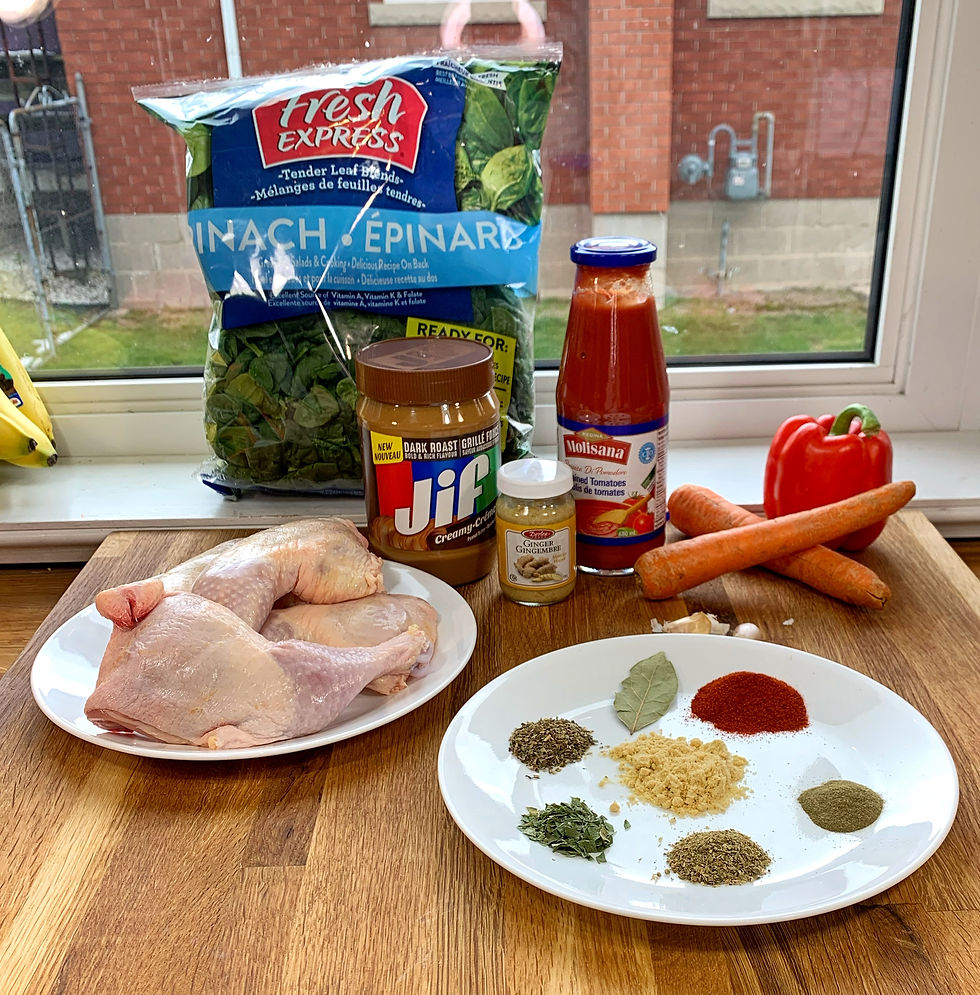
1 whole chicken broken down into pieces or 4-6 chicken thighs and drumsticks
1 jar tomato passata
1 medium onion, diced
1-2 medium carrots, diced or sliced
1 red bell pepper, diced or sliced
4 cloves garlic, peeled and finely minced
1/2 inch knob of fresh ginger, peeled and finely minced
*note you can substitute the fresh garlic and ginger for 2 tsp each of jarred pre-chopped ginger and garlic
1 tsp dried thyme
1 tsp dried oregano
1 tsp dried parsley
1 tsp dried basil
1 bay leaf
1 tbsp smoked paprika
1 tbsp chicken seasoning such as maggi or knorr
6 tbsp peanut butter, can use smooth or crunchy
salt and black pepper to taste
optional: 1 tsp cayenne pepper or chipotle pepper or 1-2 hot peppers diced
Preparation
Lightly toss chicken pieces in small amount of olive, then toss chicken with spice mixture
Add 2-3 tbsp oil to skillet or dutch oven, brown chicken pieces until golden brown. May have to do this step in stages. Remove chicken from pan and set aside.
Sautee onions, carrots, bell pepper, garlic and ginger until soft and starting to lightly brown.
Add tomato passata and peanut butter to pan and allow to come together until smooth sauce forms around vegetables. Add bay leaf.
Add chicken back to pan. Make sure to add any spices and seasoning that was left in the bowl the chicken was tossed in. Lower heat to lowest setting and allow dish to gently simmer for 1-1.5hrs until chicken is tender and vegetables are softened.
Verdict
This dish may actually get an award for making me to take back my dislike of peanut butter being used in savoury dishes. The chicken was so tender and melt in your mouth. The sauce sported some serious depth, richness and complexity to it. The peanut butter flavour was present but not over powering. I was also very surprised by how easily this dish came together and cooked up. Looking at the ingredient list gave me the impression it was going to be complicated but it was rather simple. It filled my kitchen with some amazing smells while cooking as well. Overall this dish is a must try in my opinion because it really was so tasty!
Source recipes:
Muboora
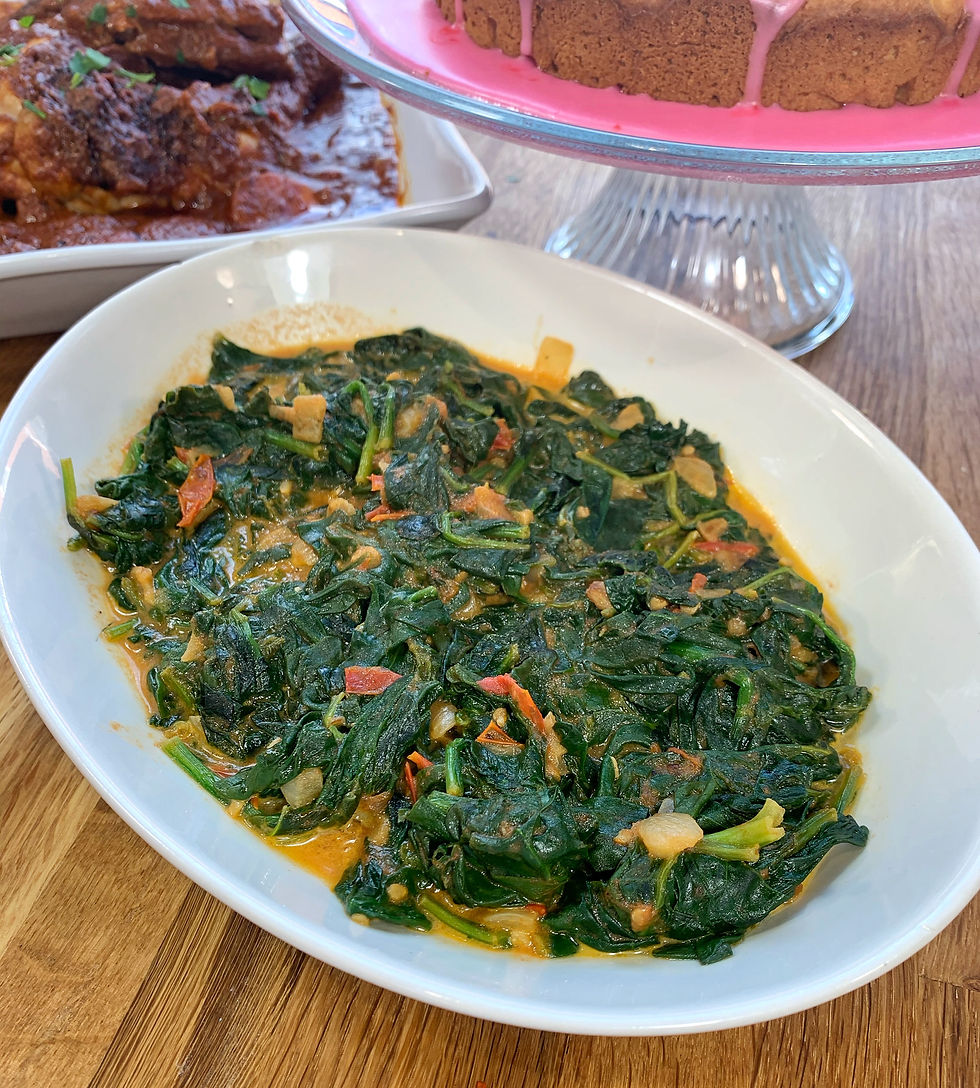
Muboora is a dish from Zimbabwe that is traditionally made with pumpkin leaves, oil, tomatoes and onions. Cream is sometimes added to the dish at the end of the cooking process. In this case I am cooking spinach inspired by muboora. The main reason for this is because I personally have a very serious pumpkin allergy which makes cooking a dish with pumpkin leaves a bit difficult. If you are able to get a hold of pumpkin leaves and want to try the dish the more traditional way then check out the inspiration recipe here.
Ingredients

aprox. 1 lb fresh spinach, washed thoroghly
1/2 onion, diced
2 roma or plum tomatoes, diced
1 clove garlic, finely minced
1-2 tbsp heavy cream
1-2 tbsp olive oil
salt and pepper to taste
Preparation
Heat olive oil in pan over medium heat, once pan is heated add onion, garlic and tomato to pan. Saute until onions soften and tomatoes begin to breakdown slightly.
Add spinach to pan, allow to wilt over heat. May have to add spinach in batches depending on the size of the pan.
Once spinach has wilted season with salt and pepper and add cream. Continue to cook 1-2 minutes longer until cream thickens. Remove from heat and serve hot.
Verdict
This is a simple yet tasty spinach dish. The tomatoes help breakup the heaviness of the cream and the whole dish comes together rather nicely. It paired really well with the rich and heavy dovi stew. I wish I could have tried this dish the more traditional way but it was still very delicious done with spinach. Please note if you do want to make the dish with pumpkin leaves then there are a few more steps than shown here so do check out the source recipe.
Chickenduza
Despite it's name chickenduza is a delicious yeast based cake that does not contain any chicken. The cake tastes similar to a sweet yeast bread and is covered in a sweet pink icing.

Ingredients

2 tsp active dry yeast
1/2 cup lukewarm milk (105-115 degrees F)
2 1/2 cups all purpose flour
3/4 cup granulated sugar
1/4 tsp salt
4 1/2 tbsp unsalted butter, softened at room temperature
1 large egg
2 tsp vanilla extract
Glaze
3/4 cup powdered sugar
1/2-1 tbsp water
red or pink food colouring
Preparation
In small bowl, sprinkle yeast over warm milk. Stir to combine. Allow to sit until frothy, about 10 minutes.
In the bowl of a stand mixer fitted with a dough hook or a large bowl, combine the flour, sugar, and salt. Mix in the softened butter, egg, vanilla extract and yeast/milk mixture. The dough will be wet, somewhere between cookie dough and cake batter.
Cover the bowl with plastic wrap and allow to rest until doubled, about 1 hour.
Grease 6 large muffin tins or medium cake pan and preheat oven to 340 degrees fahrenheit. Use spoon to transfer dough into the prepared tin/pan, about 3/4 full. Use the back of a wet spoon to smooth out the tops. Cover and allow to rise until puffed, about 30 minutes.
Bake in preheated oven until lightly golden and toothpick inserted in centre comes out dry, 25-30 minutes.
Allow cake to cool on wire rack at room temperature.
To make the glaze:
In a medium bowl, add the powdered sugar and enough water to form a smooth pink glaze. Add 1-2 drops of food colouring. If too thick add more water, if too thin add more powdered sugar. Drizzle over cooled cakes.
Verdict
So when making this cake I ran into a slight problem that derailed the whole recipe. My yeast was dead! I didn't even realize until it was too late and I was committed to making it so I forged ahead and figured even a bad cake is still a cake right!? My cake turned out a lot more dense then I suspect they are supposed to be given that it did not rise. However, it still tasted really good. There was still a slight yeasty tang to it despite it not rising and it balanced nicely with the super sweet glaze. I am definitely going to be trying this one again (after I buy new yeast) and will update if I have better success!
Source recipe: https://tarasmulticulturaltable.com/chikenduza-zimbabwe-candy-cake/
Final thoughts
Travelling another 12 369km from Port Moresby, Papua New Guinea to Harare, Zimbabwe we've gotten to experience another delicious and amazing meal!
Zimbabwe is a beautiful country with a rich cultural history and diverse natural resources who has experienced struggle and tribulations throughout its complex history. The people of Zimbabwe are strong and resilient. It was a pleasure getting to experience a meal inspired by the country. Enjoy some traditional Zimbabwean music while cooking and eating your own meal from Zimbabwe!
Join us next week as we head to Israel!
Sources

Comments