Papua New Guinea
- World of Food

- Apr 21, 2021
- 6 min read
We have arrived at stop #6, Papua New Guinea.
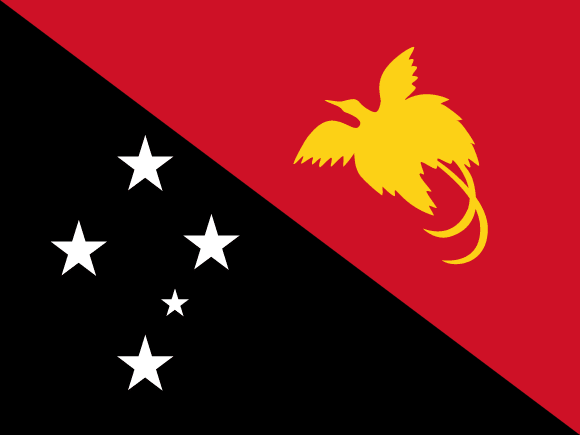
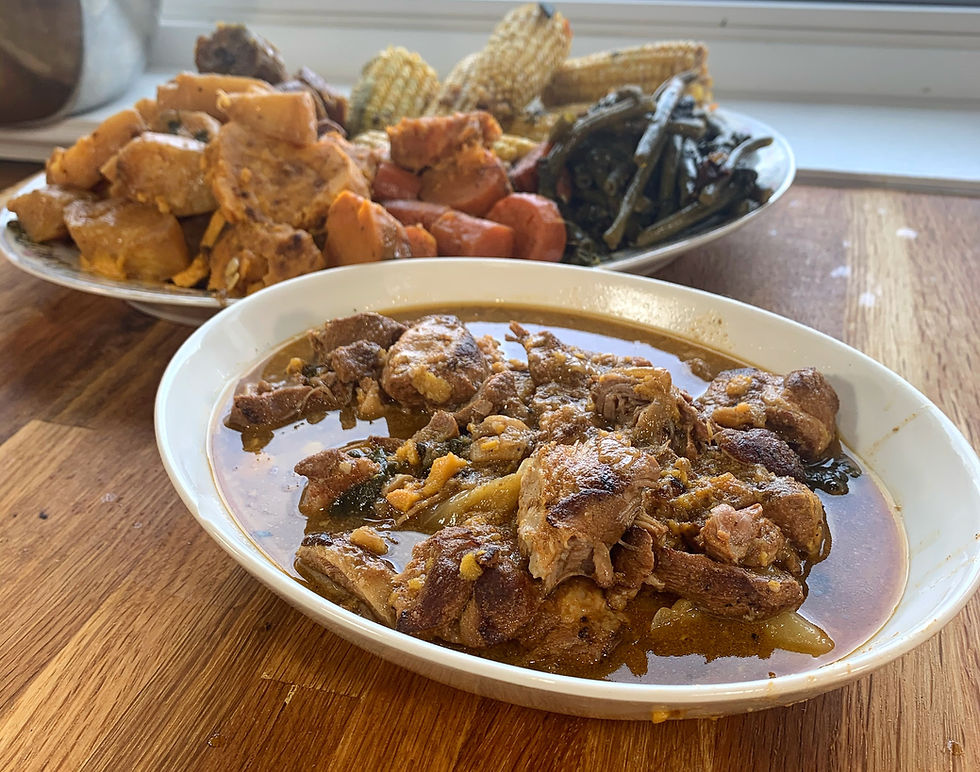
Todays menu is a very simple one. I have taken the traditional dish of mumu as inspiration to make what I am calling faux mumu.
Welcome to Papua New Guinea

Papua New Guinea, or PNG for short, is located on the Island of New Guinea in Oceania. It occupies the eastern half of the island as well as the Bismarck Archipelago, Bougainville, Buka and many other small islands and atolls in the area. The Capital city is Port Moresby which is located on the southeastern part of the island. The population of PNG is around 7.2 million and it is the third largest island country in the world at 462840 km squared.

The official language is english but the most widely spoken language is Tok Pisin which is a creole dialect combining elements of indigenous languages, German and English. There are 851 known languages in the country, including 11 languages that have no known speakers. PNG is one of the least explored countries in the world both geographically and culturally.
The first humans to arrive on the island were descendants of migrants out of Africa and these peoples are generally referred to as Melanesians. The first European visitor was Jorge De Meneses who arrived in around 1527. The Dutch first claimed the western half of the island in 1828. Captain John Moresby of Great Britain first surveyed the southern coast in the 1870's. Most early economic activity took place in the German controlled area of New Guinea. Eventually Australian forces displaced the German authorities during WW1. Australia then controlled the island from 1921. The Australian government aimed to educate the people of PNG and improve social conditions as well as boost the economy and develop political structures in preparation for decolonization of the island.

On September 16, 1975 sovereignty was established and the nation became a common wealth. At the same time sovereignty was established the area of Bougainville also claimed independent and there was a secessionist revolt. The conflict claimed 20 000 lives until it was finally resolved in 1997 when the area was established as an autonomous district. There is an ongoing conflict with Indonesian Papua at the western border in which west Papuan nationals of the free Papua movement have been in conflict with Indonesian armed forces. This has lead to incursions into the PNG territory by refugees, rebels and Indonesian troops.
Despite the history of conflict the country boasts beautiful landscapes and a diverse ecology. Researchers believe there are many undiscovered fauna and flora in the interior of the country. The country is mostly tropical with some variance depending on elevation above sea level. PNG hosts 5% of the globes biodiversity despite covering only 1% of the earths total land area. PNG is known for having over 40 species of birds-of-paradise. One of the worlds only known poisonous birds, the hooded pitohui, can be found in PNG. Its feathers carry one of the most powerful toxins known to science. The area was once joined to Australia through a land bridge so there are some common animals present such as tree kangaroos, echidnas, cassowary and crocodiles.
Only 13.25% of the population live in urban centres. More than 8 million people live in customary communities. The country is also known to have numerous un-contacted peoples. Most people live in strong traditional social groups that are centred around subsistence farming. The Papua New Guinean Constitution recognizes these traditional peoples and express the with for "traditional villages and communities to remain viable units of Papua New Guinea society. Traditional housing ranges from houses dug into the ground to retain heat in the colder highlands to houses built on stilts over the sea in coastal areas. Western style housing is becoming more common in urban settings. Some traditional villages are centred around a communal living structure for the men of the village with women's living structures in clusters surrounding the male structures. Many communities are still structured in traditional Wantok, meaning one talk or those with a shared language. Daily life focuses around the extended family, producing food and rearing children. Music dance and celebrations mark important life events such as birth, death, initiation, menarche, economic transactions and religious observances. The country is classified as a developing country. Farming accounts for 1/3 of the country's GDP and almost all commercial crops are exported. Common exported crops are arabica coffee, robusta coffee, and cacao. Food staples eaten in the country include yams, taro, bananas, tropical fruits and plantains. The national dish of Papua New Guinea is mumu, which we will be exploring further this week.
Mumu
Mumu is a method of cooking from Papua New Guinea where large quantities of food are cooked in an earth oven that is filled with coals or stones. The national dish of Papua New Guinea is named for this method of cooking. Banana leaves are layered with pork, sweet potato, vegetables, fruit and coconut milk. It is then allowed to cook in a mumu oven for a long period of time.
I took my inspiration from recipes I found several other international cooking blogs including Coffee & Vanilla, Good Food On Bad Plates, and Cliffieland. However, my version is going to stray from traditional methods.
Several reviews of this dish that I read indicated that although tasty, it can be a bit on the bland side. I decided to take some steps to avoid this. I marinated the meat in a marinade inspired by souther bbq pulled pork and pre-seared most of my components to add an extra layer of flavour.
I do not own or have access to a traditional Mumu oven so it was cooked in my regular western style oven.
I could not procure banana leaves so I decided to use cabbage leaves, mostly because it was the only thing I could think of to substitute. I suppose you could use any kind of leafy vegetable such as kale or spinach as well.
So here is the recipe and method that I ended up using:
Ingredients
*please note many of these ingredients don't have specific amounts due to the nature of this dish. If you are making it for yourself use whatever ingredients in whatever amounts your heart may desire.
2 lbs pork meat, cut into large cubes, fattier cuts are best suited for this low and slow cooking style

1 onion, sliced
4 cloves garlic, minced
pineapple, cut into large chunks
sweet potato cut, peeled and cut into large pieces
plantain, sliced
carrots, peeled and cut into large slices
corn-on-the cob, 3-4 cobs
green beans, topped and tailed
fresh spinach, washed and dried
banana leaves, or other leafy vegetable such as cabbage or kale
1 can coconut milk
for the pork marinade:
2 tsp garlic powder
2 tsp onion powder
1 tsp smoked paprika
1 tsp salt
1 tsp black pepper
1 tbsp tomato paste
1 tbsp dijon mustard
1 tbsp brown sugar
1/2 tsp chipotle powder or cayenne pepper, depending on desired spice level
1 tbsp apple cider vinegar
Preparation
Combine ingredients for the marinade into a paste, coat the pork well in the marinade. Cover and leave refrigerated for at least 3 hours or overnight if possible.
Heat neutral cooking oil in frying pan and sauté onion, garlic, and pineapple until beginning to caramelize and take on some brown colour, remove from pan and set aside
Sear pork until begins to caramelize and get brown, remove from pan and set aside
fry sweet potatoes, plantain and carrots until begin to caramelize, may have to do this is separate batches, remove from pan and set aside.
Prepare a large oven safe baking dish with lid by lining it with banana leaves or whatever leafy vegetable you have chosen to use. I used a dutch oven and it worked well.
Begin layering ingredients starting with pork and then layering vegetables in whatever order you desire.
Pour coconut milk over layered ingredients
Cover with more banana leaves/leafy vegetable
Cook in oven at low temperature (250 degrees Fahrenheit) for 6-8 hours
Verdict
While this dish was technically a success it still had some flaws. It did make some very juicy, tender and delicious meat though. In the end I was glad that I altered it to add the marinade to the meat because I can see how it would be considered bland by western standards without that. The vegetables came out a bit on the mushy side and I wish I could have enjoyed the individual flavours of each ingredient rather than a big mass of similarly tasting ingredients. All it all it wasn't bad but it just wasn't to my tastes. I am still so glad I had the opportunity to make it, maybe if I were to repeat this in the future I would try adding more seasoning to the vegetables and meat. It does leave me wondering if the traditional way of cooking it in an underground oven imparts more flavour into it. Overall I am still so glad to have had the opportunity to explore a little bit of Papua New Guinea through its food.
Final Thoughts
Another 14 841 kms travelled from Quito, Ecuador to Port Moresby, Papua New Guinea!
Papua New Guinea is an absolutely fascinating country boasting an amazing mosaic of different cultures and traditions in all of the indigenous groups located there. I would love to one day make it there and explore it in person a little bit! I highly suggest getting yourself in the mood for this adventure with either some traditional Papua music. If you have the ability to cook it in a more traditional way then I encourage you to try it for the full experience.
Stay tuned for our next stop as we travel to Zimbabwe!
And as always,
Peace, love and tasty travels!
References/Sources
Comments