Ecuador
- World of Food

- Apr 11, 2021
- 9 min read
Stop #5 is here and we are officially more than 1 month into our adventure. Welcome to Ecuador.
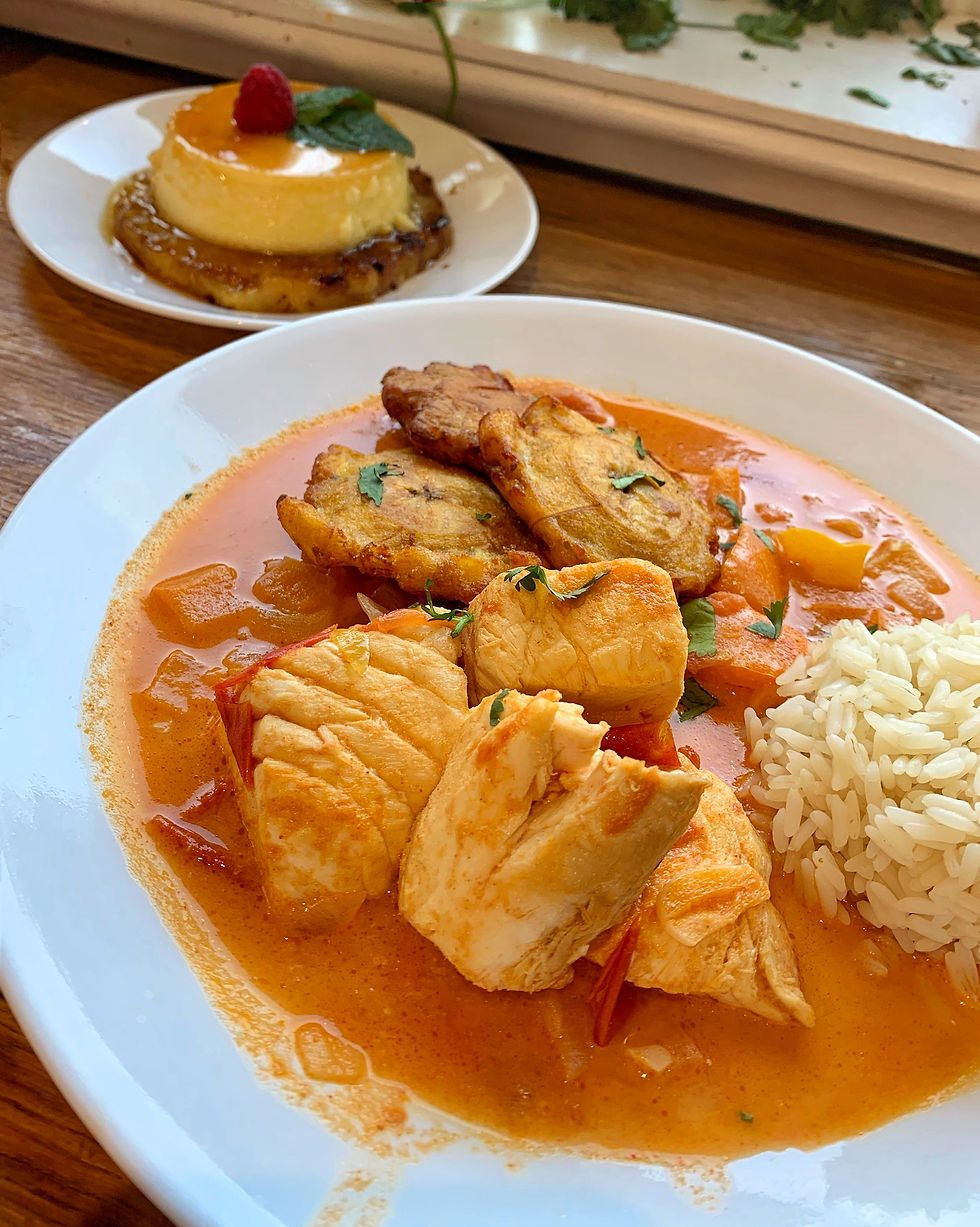
Today we will be making a delicious fish dish called pescado encocado. It is a citrus seasoned fish served with a coconut sauce. We will also be enjoying patacones or fried plantains on the side. For dessert we are indulging in a flan de piña or pineapple flan. All the recipes are courtesy of a website called Laylita's Recipes.
Tell me more about Ecuador!
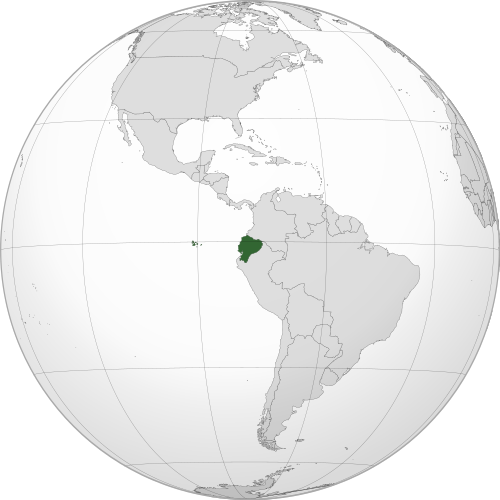
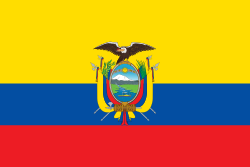
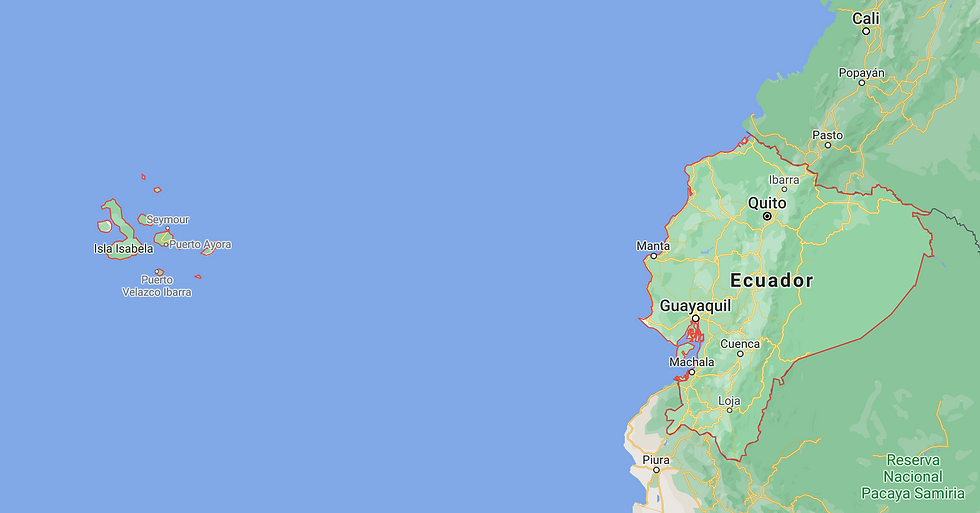
Ecuador is a country located in the Northwestern region of South America. It is bordered by Columbia, Peru, and the Pacific Ocean. Ecuador is one of only two countries in South America that do not share a border with Brazil. Ecuador also includes the famous Galapagos Islands. The country was created in 1830 when the Republic of Gran Columbia collapsed. The capital city is Quito. The city is located 2850m above sea level which makes it the highest capital city in the world. Ecuador is actually the closest country to space! Due to the shape of the earth and a slight bulge located on the Equator, Mount Chimabarozo in Ecuador is actually 1.5 miles higher than Mount Everest. The population of Ecuador is 15 654 411 people. The people of Ecuador celebrate their national independence day on August 10th.
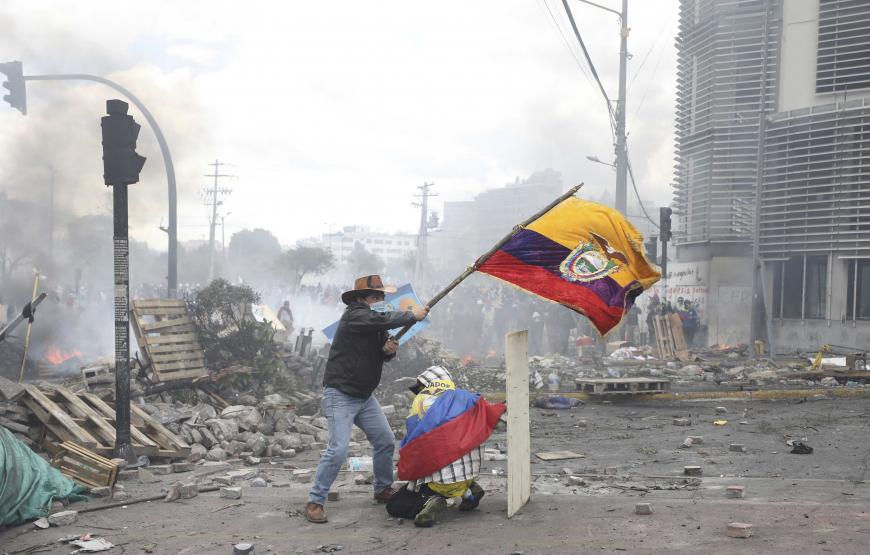
There are at least 14 recognized languages spoken in the country. Spanish is the official language as well as 13 indigenous languages. Ecuador was first settled in the Pre-Incan period by the Paleo-Indians of North and Central America. Over time many civilizations arose including the Valdiva, Machalilla, the Wuintus, and the Canari. The Incans arrived and the area was eventually absorbed into the Incan empire in 1463. Nearly 100 years later came the arrival of the Spanish, and along with them came diseases such as small pox that caused high fatalities to the native peoples. Decimating much of the local populations. Spanish rule persisted for 300 years until the people of the city of Quito were the first people of Latin America to fight for independence. On May 24th, 1822 Ecuador gained full independence from Spain. On May 13, 1930 Ecuador separated from Columbia. Since it achieved full independence Ecuador has been involved in numerous land, border and territorial disputes. In 2019, riots and protests broke out in response to certain austerity measures put in place by the president which drove the government out of the city and forced it to relocate to another city. In the end, protests ceased after a deal was reached between indigenous groups and the Ecuadorian government.
Ecuador has a developing economy that is highly dependent on commodities. Its economy is the 8th largest in Latin America. Oil accounts for 40% of exports. Ecuador is also a major exporter of bananas, rice, potatoes, cassava, plantains and sugarcane. In 2008 Ecuador was the first country to officially recognize the "rights of nature". Rather than treating nature as property Ecuador recognizes that nature has constitutional rights and has the "right to exist, persist, maintain and regenerate its vital resources". Ecuador actually has the highest biodiversity per square kilometre than any other country. Ecuador is divided into four main geographic locations: La Costa (the coast), La Sierra (the highlands), La Amazonia (the east) and La Region Insular (Galapagos Islands).

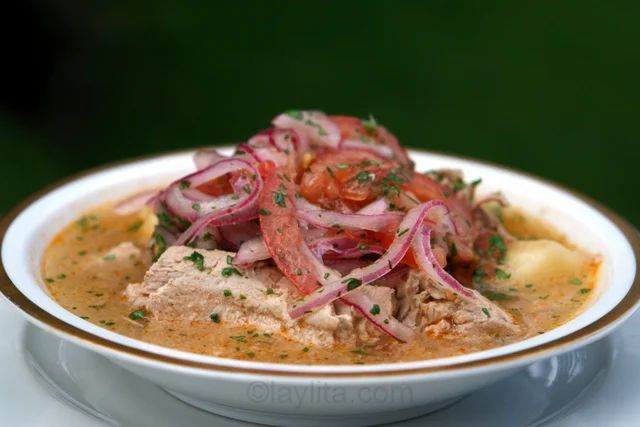
Ecuadors mainstream culture is influenced by its Spanish heritage with Armeridian and African elements. The cuisine of Ecuador varies greatly. Most areas of Ecuador follow a three course meal which usually consists of a soup, a course with rice and a protein and dessert with coffee. The focus of the cuisine varies by region with pork, chicken, beef and guinea pig being popular in the highland region and seafood, ceviche and plantain being popular in the coastal regions. The national dish of Ecuador is Encebollado which is a fish stew.
Pescado Encocado
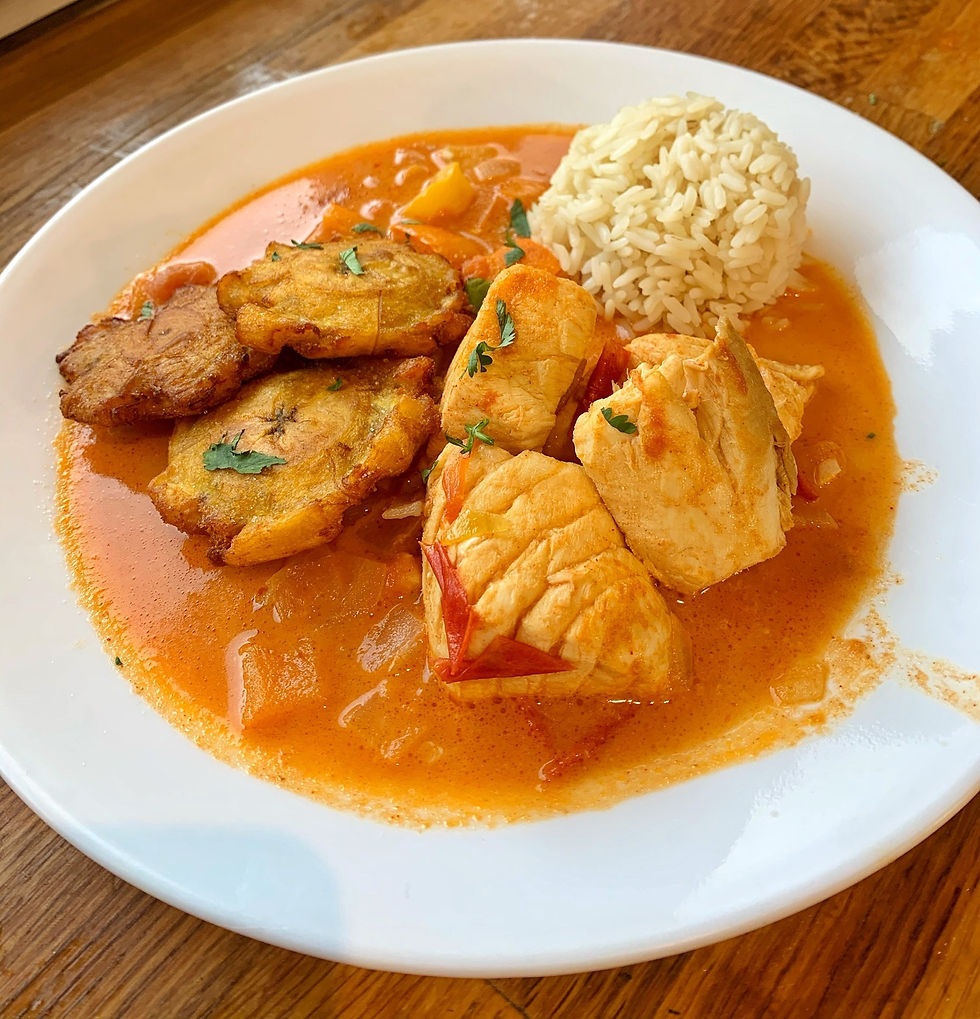
Pescado encocado is fish cooked with a coconut sauce. The fish is marinated in citrus juices and spiced and then cooked with cilantro, onions, tomatoes, bell peppers and coconut milk. It is popular in the coastal regions of Ecuador where fish is commonly eaten.
Ingredients

2 1/2 lbs halibut or any other fresh white fish, cut into medium sized cubes
1/4 cup lime juice, approximately 2-3 limes worth
juice from 2 oranges
4 garlic cloves, crushed
1 tsp cumin powder
1 tsp paprika or achiote powder (I used smoked paprika)
1 tsp ground coriander
2 tbsp oil
1 medium onion, diced or sliced
2 bell peppers, diced or sliced
4 roma tomatoes, peeled and chopped
14 oz can coconut milk
3 tbsp fresh cilantro, finely chopped
fresh shredded coconut, optional
salt to taste
Preparation
Mix the lime juice, orange juice, crushed garlic, cumin, paprika, coriander and salt in a small
Marinate the fish in this mixture for at least one hour
Once fish has marinated, heat the oil in a deep frying pan or dutch oven. Add the onions, tomato, bell pepper and salt. Cook for about 5 minutes on medium heat.
Add the coconut milk, mix well and cook for about 10 minutes. If you prefer a thicker sauce you can thicken it by adding 1/2 corn starch to some cold water and adding that mixture to the coconut milk.
Add the fish, along with the marinade, cover partially and let simmer for about 15-20 minutes. Timing will vary based on size of fish.
Add some freshly grated or shredded coconut (optional)
Sprinkle with cilantro and serve with rice and fried plantains.
Verdict
This dish was super easy to make, it came together really quickly and packed a punch of citrusy delicious flavour. The fish was super tender and the sauce was super rich and soaked into the rice wonderfully. I used halibut but you can use any fish or even seafood option you may prefer. I could see this even working with chicken if you don't like fish. I am not a fan of cilantro so I went very light on it just at the end, but you could easily sub in parsley if you dislike cilantro but want to keep the herbs in it.
This dish even passed the 3 year old test with my daughter saying "mmm best fish ever" which admittedly "best thing ever" is her favourite phrase right now but I am still going to tell myself that it was the best fish ever made.
Tostones
Tostones, also known as patacones, are fried green plantain slices. They are fried once, smashed and then fried a second time, making them extra crispy and delicious.
Ingredients
2-3 green plantains (use aprox. 1 per person)
neutral oil, for frying
salt to taste
Optional: any kind of extra seasoning you would like to add to the tostones once they are cooked (hot pepper powder, seasoning salt, garlic salt, etc)
Preparation
Peel the plantains, the easiest way to peel a plantain is to make a lengthwise cut on one of the angles, the cut should be skin deep without touching the actual flesh of the plantain, then use the knife to raise the skin and peel it off.
Cut the plantains into thick slices, you can make straight cuts or slightly diagonal cuts.
heat the oil enough oil to cover the plantains in a frying pan or use a deep fryer. The oil temperature should be around 350 degrees fahrenheit. Fry the plantains until the start to get yellow but not golden.
Remove the plantains and place on paper towels to drain the oil.
While the plantains are still warm use the bottom of a glass, small bowl or wood pestle to smash and flatten the plantains, do this gently to keep the slices from breaking. A few cracks are ok as long as the slices remain in one
Reheat the oil to 375 degrees fahrenheit and dry the plantains until golden on each side, about 1-2 minutes per side.
Remove from oil, drain on paper towels and add salt and seasonings while they are still hot.
Serve warm as a side dish or as an appetizer with dipping sauces.
Verdict
I have never cooked with or even eaten plantains before so this ingredient was a bit of a mystery to me. I'll be honest my brain kept telling me it was going to taste like bananas. It really did not at all, more like a slightly sweet potato. I really like the crunchy texture these added to the dish and they provided a nice alternative to french fries when you are craving that deep fried starch element. In fact cooked plantains offer way more vitamins nutrients and fiber than potatoes do. Making these has sparked my curiosity and I will definitely be experimenting some more with plantains. As for how they paired with the dish, like I said they added some much needed texture but they were also great soaked and dipped into the sauce from the fish. Definitely a must have on the plate.
Flan De Piña
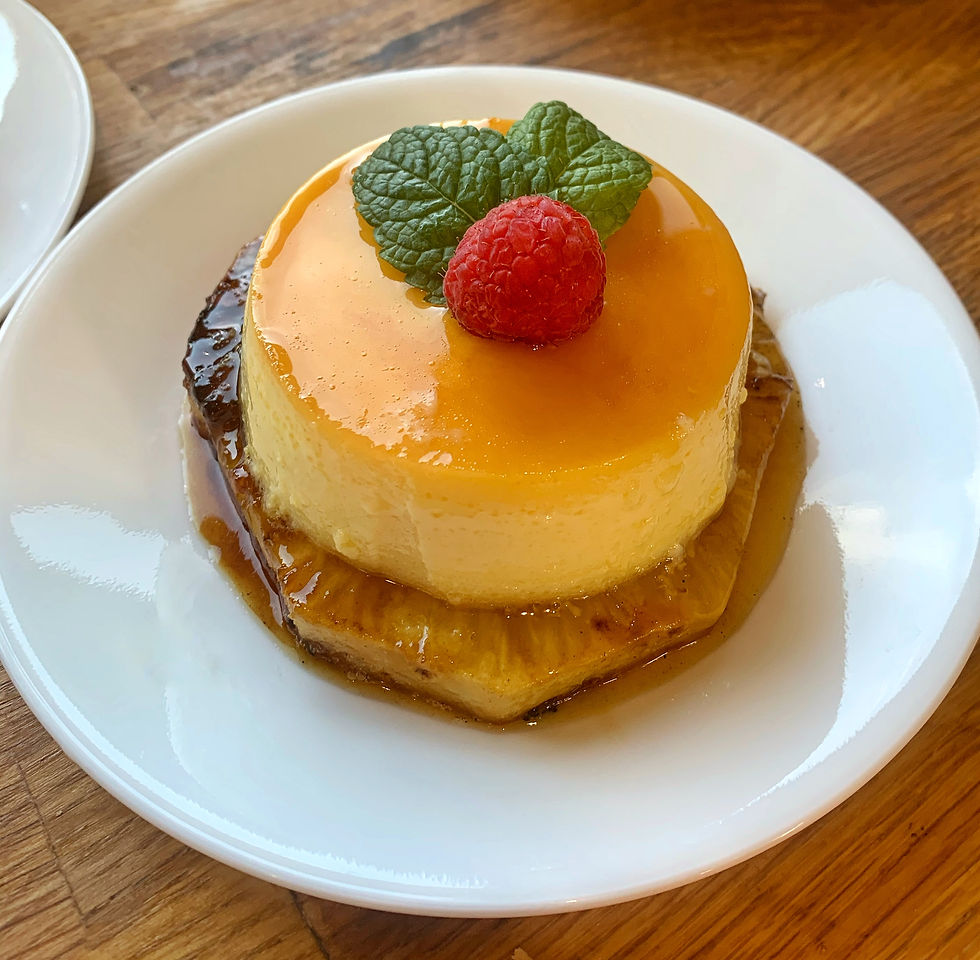
Flan is a custard like dessert that is made with sugar, milk, eggs and vanilla. This version also adds pineapple juice and rum. In Ecuador it is common to make flans with pineapple, coconut, mango, or other fruit.
Ingredients
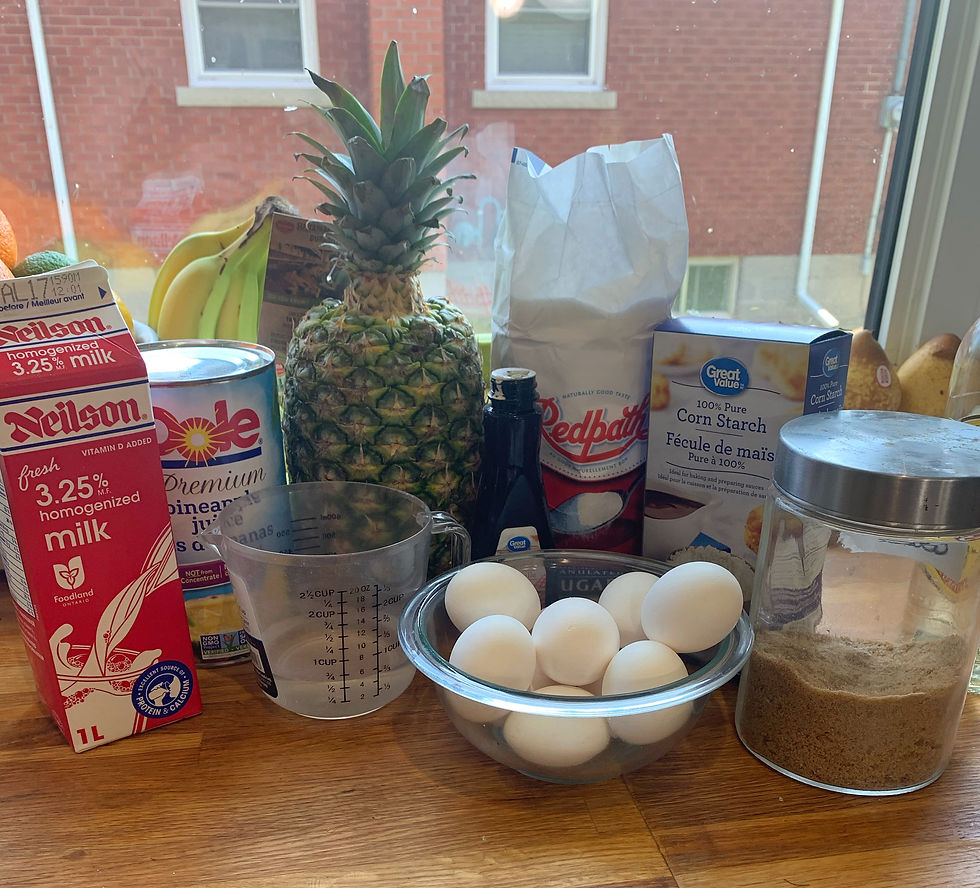
2 cups sugar, 1 cup for caramel and 1 cup for the flan
1/2 cup of water
2 1/2 cups pure fresh pineapple juice, strained and foam removed
1 tbs corn starch
1 cup whole milk
10 eggs
1 tsp vanilla extract
2 tbs rum
brown sugar
fresh pineapple slices
10 buttered oven proof ramekins or flan molds
large oven proof dish filled with water
Preparation
To make the caramel, bring 1 cup of sugar and 1/2 cup of water to a boil over medium heat and boil until it gets a deep amber colour, about 8-10 minutes.
Pour the hot caramel into the previously buttered flan molds or ramekins and try to distribute it evenly on the bottom of the molds.
Combine the pineapple juice with the sugar and corn starch in a small sauce pan over low heat and bring to a boil. Keep an eye on it as it is prone to boil over, let simmer until it begins to thicken, about 5-8 minutes and remove. Allow to cool completely.
Pre-heat oven to 350 degrees fahrenheit.
beat the eggs on low speed; slowly mix in the pineapple mixture, the milk, the vanilla, and the rum until well combined.
Strain the flan mixture and pour into the caramel coated molds.
Place the flan molds in the oven dish with water. The water should cover at least 1/2 height of the ramekins. Bake until the flans solidify, around 45-50 minutes.
Let the flans cool completely, then refrigerate for a couple of hours.
Pour Spoonful of brown sugar over the pineapple slices and cook on griddle pan or frying pan until they are caramelized. Alternatively you can put them under the broiler until the sugar begins to bubble and caramelize.
to help the flans release place the ramekins in a bowl with warm water before serving to melt the caramel and loosen the flan.
Verdict
This was another new experience for me, I have never made flan before. It was pretty simple to make and the nice thing about this dessert is it can be made hours ahead of time and then just popped out of the molds right before serving.
Admittedly I made a few mistakes along the way but the end result was still absolutely delicious. Hopefully you can learn from my mistakes:
My first mistake happened when I was making the caramel, I let it go way to far and after I transferred the caramel to the ramekins it hardened to rock solid, it loosened up a bit during the un-molding process but it did leave a lot of the delicious caramel behind, stuck to the ramekins.
The second mistake I made was not heeding the warning that the pineapple mixture will boil over quickly. My first batch, I turned my back for what felt like a second and then I was left with a sticky mess all over my stove. This step in the process really does require all of your attention!
Lastly when I cut my pineapples I cut them very thick, this meant that they didn't cook fully all the way through and were still pretty hard. I think in the future I would definitely cut them a bit thinner so they can get soft and caramelized all the way through.
With all that being said this dessert was still absolutely delicious. It was not too heavy and had a deep caramel flavour that was well balanced by the acidity of the pineapple.
Final Thoughts
Week #5 has taken us another 11625.9 km from Moscow, Russia to Quito, Ecuador.
This meal was light, fresh and so very tasty. The sauce for the fish was killer and it soaked wonderfully into the rice. The tostones added a perfect crunchy texture to the dish and were delicious dipped in the sauce. The pineapple flan was the perfect way to close out the meal. Definitely a must try for any kitchen traveller!
During your meal inspired by Ecuador try playing some traditional Ecuadorian music and pairing the meal with an Ecuador inspired cocktail or drink.
I'm looking forward to you joining me again next week as we cross the pacific ocean and head to Papua New Guinea!
As always, peace, love and tasty travels to all!
Comments